Tuesday, February 16, 2016

Chocolate Chip Cookie Cheesecake Bars

Because one or the other isn't enough, right?
These are very rich, so perhaps the best part is, you don't eat too many at once and truly savor the flavor of the cookie dough along with the sharper flavor of the cheesecake.

Ingredients
Crust:
  • 2 cup flour
  • 1/2 tsp baking soda
  • 1/2 tsp salt
  • 2/3 cup softened (not melted) butter
  • 1/2 cup sugar
  • 2/3 cup brown sugar
  • 1 egg
  • 2 tsp Vanilla
  • 2 cup chocolate chips
Filling:
  • 8 oz softened cream cheese
  • 1/2 cup sugar
  • 1 egg
  • 1 tsp vanilla
Instructions
  1. Preheat oven to 350
  2. Line a 9x9 inch square baking pan with parchment paper, and spray with nonstick spray
  3. Whisk together flour, baking soda and salt (for the crust)
  4. Mix (with electric mixer) together butter, brown sugar and sugar, until fluffy
  5. Add the egg and vanilla, and keep mixing until it's all mixed together
  6. Add in your flour mixture and mix until all incorporated
  7. Fold in the chocolate chips slowly
  8. Press 2/3 of this mixture into the bottom of the prepared pan, and smooth so the layer is even
  9. Combine your filling ingredients and beat until blended
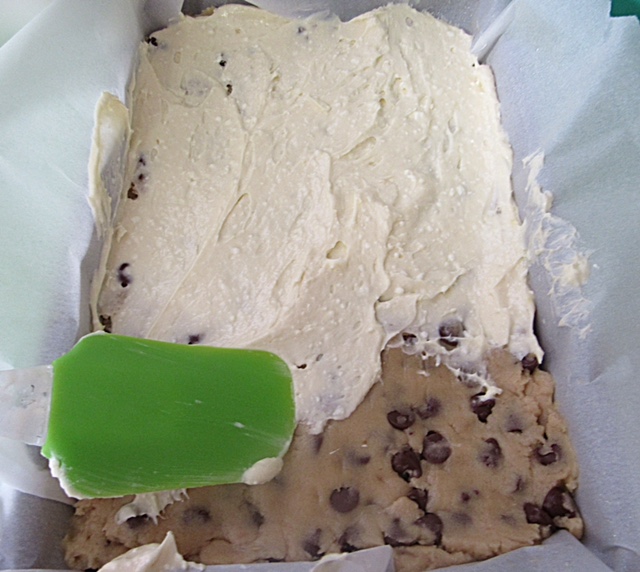
  10. Spread the filling over the cookie dough layer and smooth so it's all level
  11. Crumble the remaining cookie dough over the filling layer
  12. Bake for 1 hour, or until the cheesecake is set and the cookie dough begins to brown
  13. Cool completely before slicing
  14. Enjoy!


Friday, February 12, 2016

Market To Everyone and You Reach No One


A successful marketer knows how to read people. I think about this every day, as I’m creating strategies, programs and content for my clients, and always can hear Kenny Loggins singing in my head. “I’ve made a living out of reading people’s faces…” We used to have to put together elaborate buyer personas, and market to people who fit into those molds. However, with the rise of social media, and the increasing number of people from all demographics using various social media platforms, we can now create content and programming based on real people.

Prior to social media, marketing tactics were more widespread. We could put together a great promotion and send it out to a wide variety of stores, or place an ad in a newspaper where hundreds of people would see it, or even put up a billboard. That was how we used to reach people. We would throw messages out en masse, in hopes that it would reach both our current customers and potential new customers.

That doesn’t work anymore. Today, we realize that we need to personalize content, to “each” person, and market to that “one” person. Consumers today are not just smarter to the ways of marketing, but they are suffering from marketing messaging and ad fatigue. Even if a great ad comes across them, they might tune it out without even meaning to – there are simply too many messages being thrown out there on too many mediums today.

So, how does someone break through that? If people are tuning out ads without even knowing they’re doing it, how can we ensure our messaging won’t get tuned out? It is a lot easier than many marketing folks realize, and while it takes more work to market with personalization, it will help ensure the messages are landing where they need to be.

1.     Know Who You Are Talking To

This goes a bit deeper than simply saying “know your target audience.” You need to get more specific in your head with who IN your target audience you are speaking to. My target audience for a brand I work with might be men and women, ages 18-40 who live in Southern California. Sounds pretty specific, right? Yet it’s not specific enough. I need to delve deeper and start listening to what segmented groups of that audience are saying about my brand, what their buying habits are, and how I can reach them before they even realize my brand can enhance their life.

2.     Relate Your Messaging to “Me”

We are all consumers at some point in our day, of a variety of different products. What makes you choose one brand over another? For me, I will choose a brand that makes the most sense for my life. As a marketer, I need to reach “me” and show you how my brand can seamlessly fit into your life, and how much easier or better your life will then be, due to using, eating or drinking my brand. What questions are being asked by the people you are trying to reach, and how can your product or service answer those questions? Those answers need to be provided in your content and messaging.

3.     Where Can I Find My Audience, and in What Format?

Not only does the content I send to you need to be relevant on topic, but it also needs to land in the right spot for “each” person. I am pretty vocal about my love for Twitter. Some people don’t use Twitter and prefer to use Facebook. If the person I’m trying to reach prefers to receive their messaging on one platform, my personal preferences don’t matter – YOURS do. How “you” want to receive content needs to be a marketer’s main focus.

Emails have employed this idea since inception– how many times have you signed up for an email subscription and been asked if you prefer messages in HTML or plain text? That is an example of personalization. Today, people consume content in more ways than simply plain text – does your target audience prefer infographics? Blogs? Do they attend Twitter chats for the information they seek?

4.     Don’t Be Creepy

Personalization, when done right, is smooth. You don’t want to personalize too far down, to the point that people feel like their space or privacy is being invaded. You can personalize content and strategies without it seeming like you have been listening in on people’s private conversations. Social listening does not mean stalking!

Undoubtedly, personalized content marketing takes much longer than any marketing of the past. However, what happens to the very best content ever produced in the history of man when it’s not seen? Did it really exist? If you are taking the time and psending the money to put out marketing messaging, it only follows that you want those efforts to pay off.

 
There is more data to be found and more ways to have real conversations with your target consumer than ever. Understand who those people are, so you can develop relevant content for them that is then delivered at the right time, in the right format and where they are best able to benefit from it.

Monday, February 8, 2016

All Social Platforms Were Not Created Equal


Sure, you can easily lump all the different social media platforms into a large bucket and call them “Social Media,” but to truly reach your target audience today, it means tailoring your messaging for each platform. While a “spray and pray” method used to work in the past, it doesn’t anymore. Consumers talk about content fatigue, and are getting much smarter in their abilities to tune out “bad” marketing.

Now, to really speak to THAT consumer you are writing each piece of content for, it has to be relevant. And relevance isn’t limited simply to the topic; the platform and method of content delivery is equally important. I have a few friends that will write something they are proud of, or think is great for who they are trying to get in front of, and they will post the same piece, word for word on both Twitter and Facebook. Here’s why I’m already tuned out – if I were to see it on only Twitter or only Facebook, I might feel it’s a bit more tailored to me and my needs. But the second I see it just thrown out there, my mind has become trained to begin ignoring what the piece is about, even if it is exactly what I’m looking for. Social media has trained my brain to look at marketing messaging cast out in a huge net and phishing. Also, and here’s the catch – if you are posting the same thing on both Twitter and Facebook, what is my (and countless hundreds of others) incentive for following you on both sites? While personalizing your marketing is important, if you are posting identical content on both of those platforms, you are losing out on potentially millions more people seeing your content.

Unfortunately, these friends of mine that are doing this aren’t necessarily “new” to marketing, or “new” to using social media marketing. Nor are they alone – I am surprised almost daily at people I used to think of my go-to’s for “best practices” doing this exact same thing. I like to think that it’s not a misunderstanding of how to use social media platforms correctly, but then what am I left with? Are they simply lazy? Or do they truly not recognize that each social media site is different? WHO you are writing for needs to be just as much of a focus as WHERE you are writing for.

For brevity, let’s focus on just Twitter and Facebook here. Both are necessary for businesses and brands to garner attention, new customers, and deepen relationships with existing customers. Those current and potential customers, as well as you and me (and millions of others) go to each of those sites for different reasons. It is our job as marketers to learn what those reasons are, and what drives people to one site for certain information and sharing, where they are most receptive to information we are aiming to provide for them, and where ultimately, we can convert them.

Twitter vs Facebook: What’s the Big Difference?

There are generalizations we can make about who visits each site, and break those down by demographics. When we understand who is going where, we can begin to come up with strategies to get in front of those people, to achieve each of our goals.

The statistics seem to change daily, but it appears that Twitter users skew younger than Facebook’s average users. That makes a difference when you think of what content to share on Facebook. Many articles have recently been written that the biggest growth in users that Facebook is seeing recently is within the 65+ crowd. So while emojis and gifs may be all the rage on Twitter, they will most likely not be as relevant on Facebook.

We can then generalize and say that content written for Facebook needs to go a bit deeper in information and topic, and be written for a more mature audience.

Working off personal knowledge, (as marketers need to be able to do) Facebook friends are more often people you know in person, as opposed to Twitter, where you are more likely to have “Twitter friends” you have never met. Think of the people you engage with the most on Twitter – if you are like me, they span the globe more than the people you are friends with on Facebook.

This is important to keep in mind for writing content – content for Twitter may need to have a more global feel than Facebook posts. If you are a brand, odds are that the people that have liked you on Facebook are more concentrated in where they live – that would make sense, since people are more likely to like a brand they can purchase. If you only sell in the US, it follows that you will not have many likes coming from the UK or Australia, while on Twitter, people from another country may follow you more for your content, than for availability, coupons or deals.

How do topics differ between Twitter and Facebook?

Right away, you can see that with the character restraints currently on Twitter, content must be written to grab your audience much faster. Facebook allows you to write more in a post, whereas on Twitter you would have to send someone off the platform via links to get your full message out.

As we mentioned with friends vs people you haven’t met, Facebook topics tend to be more personal in nature. Twitter topics are less personal, focusing more on trending topics, news and opinions.

Twitter moves much faster than Facebook. The average life span of a tweet is under an hour, where on Facebook, posts are seen for much longer (depending on how many friends you have). Because of this, you will want to repeat certain tweets during different times of the day, where on Facebook, you will only post the same post once.

On the flip side, Twitter is like a raucous soiree in which everyone is talking over everyone else. Therefore, the relationships are pretty superficial and all about the fun they are having at that moment in time. You may find that Facebook is better for your brand for converting casual consumers to more loyal buyers. I believe this is because with the more personal nature of sharing on Facebook, influence amongst friends recommending products to one other is stronger, because people are more connected and personal.

However, because of hashtags and Twitters search functions, people that influence others will tend to influence many more people than they do on Facebook.

What do we do now, with this information?

We begin by learning to write for Twitter and for Facebook, but not with the same content at the same time.

Let’s start with Twitter

Twitter allows you to post 140 characters per Tweet. However, it is recommended to use much less, so that people can RT your posts and still have space to include commentary, as well as allowing yourself room for hashtags that will help each  Tweet reach the people you are writing it for. Hashtags will also allow you to encourage conversations between people around those terms. I would suggest aiming for no more than 100 characters/tweet.

You will want to have something compelling and relevant to say in the beginning of your tweet to grab followers’ attention and stand out in an increasingly busy stream. Images are perfect for attracting people to your tweets and can say much more than your allowed 140 characters.

And now for Facebook

If we researched and learned that Facebook is more personal, posts on this platform will need more emotion tied to them. You have more room here to tell more stories from a personal point of view, so take advantage of that time and space.

Images are just as important on Facebook as they are on Twitter. They still help grab attention on the News Feed and give people more opportunity to connect with your visual and your words. Now, you even have the option of adding a personal video or even live stream without having to take users off the platform they are already looking to connect with you on.

Know Your Audience

No matter the platform, you will need to know who is going to see your posts and when, and what their preferred method of receiving your content is.

The better and more personally you can get to know your target audience, the better you can craft posts for them, no matter the site. It takes time to listen, chat and engage with all the people you want to, but without doing so, you won’t have the edge on knowing what types of content they are seeking, and where they are most likely to see it. The time you spend getting to know your audience will definitely pay off.


Monday, February 1, 2016

Skinny Chocolate Muffins

I am all for rationalizing my indulgences and turning guilty pleasures into just pleasures. Especially when it comes to chocolate. I recently made these muffins and loved them. I want to work on making them stay a bit moister for longer - let me know if you have any tips!

Ingredients
  • 1/2 c brown sugar + 1 tbsp. brown sugar, firmly packed
  • 3 tbsp. unsweetened cocoa
  • 1/2 tsp baking soda
  • 1/4 tsp salt
  • 1/2 c water
  • 1/4 c unsweetened applesauce
  • 1/2 tsp apple cider vinegar
  • 1 1/2 margarine, melted
  • 1 tsp vanilla extract
Instructions
  1. Preheat oven to 350
  2. In one bowl, stir together flour, brown sugar, cocoa, baking soda and salt
  3. In a second bowl, stir together the remaining ingredients
  4. Pour the mixture from the second bowl into the first bowl
  5. Stir until you have a smooth batter
  6. Pour into a nonstick muffin tin coated with cooking spray
  7. Fill until half full
  8. Bake 20 minutes, or until the toothpick test comes out clean
  9. Enjoy!

Friday, January 29, 2016

All-Natural Homemade Pumpable Lotion

I am on a big DIY kick lately. One of the main things I wanted to learn how to do was make my own lotion. I use lotion often (especially during these harsh Chicago winters) and wanted to save money and be able to have exactly the scents I wanted.

The first few lotions I made were great, but very thick and a bit hard. I wanted to find a lotion recipe that I was able to put into a pump and also into small containers to keep with me. After much trial and error, I found a recipe I was able to adapt - and now I want to share it with you!

Ingredients
  • 1 cup water
  • 1/4 cup Old Fashioned Oats
  • 1/2 cup almond oil (I also have used jojoba oil and it works exactly the same)
  • 1/2 cup organic extra virgin coconut oil
  • 3 tbsp. beeswax pellets (I use the pellets as they're the fastest to melt)
  • 1 tbsp. Vitamin E oil
  • Essential Oils for scent (optional)

Instructions

1. Put the water and oats into a Mason jar and soak for 12 hours at room temperature.

2. Drain the oats, keeping the water from the oatmeal. You want to end up with 1/2 cup of oatmeal water. You'll be left with oats for breakfast! Set aside the oatmeal water for a later step.

3. In a bowl that can be heated (I use a glass measuring cup), add in the almond oil, coconut oil and beeswax. Heat this in a double boiler until fully melted.

4. Put the oil mixture into the fridge for 45 minutes.
 
5. Place the oatmeal water, Vitamin E oil and any essential oils into a mixing bowl. Scrape the container from the fridge into this bowl and mix both mixtures together with a handheld mixer. Continue to whip until it looks like soft, creamy lotion.
6. Pour the lotion into an empty Ziploc bag and snip off a corner (like a homemade pastry bag). Squeeze the lotion from the bag into your pump bottle.

7. Use and enjoy! You can store this lotion at room temperature.
 

Monday, January 25, 2016

8 Ways To Be More Productive Working From Home


In the sixteen years I have been working professionally, I have been fortunate to spend 9 of them working from home. My very first job out of college, at 21, was a work-from-home job. I had never had a “real” full-time grown up job before, and it was very exciting. However, I had no clue how to manage my time. (Why isn’t time management a college business course?) Still living at home, I set up a home office in my bedroom, with a little desk that sat me in front of a window that opened onto the street, and I would either spend 15 hours each day working at that desk, or I would end up spending more hours inches away in my bed.

Many of us work more productively working from home, as opposed to working in an office environment. On Twitter, I see many people complaining about working from home, or writing blog posts about “How To Keep Your Sanity” when you work from home, but personally, I don’t agree with those. I find that my gratitude for never having to battle traffic, having no stress that perhaps I’m not home and my dog needs to go out or there are dishes waiting for me in the sink outweigh any negatives. That does not mean it is without its challenges. As I mentioned before, time management is the number one. It takes a lot of self-discipline to successfully work from home, and it is an ongoing process to continually find the best ways to be the most successful. What works for me may not work for you.

Here are 8 tips I hope will help make you more productive when working from home.

1.      Give Yourself a “Commute” to the Office

I have a spare bedroom in the current house that I use as my office. On the weekends, I do not enter this room at all. I only go into my office when I am working. Are there some weekends I DO have to work? Absolutely, and I will go into the office to work, and then go into any other room to give myself a weekend. Your office set up is also very important – it should have the “right” light and desk set up for you to be most productive. The main idea is to keep your work space and home space separate. I would highly advise against taking your laptop into bed with you. It’s important to leave work behind and clear your head, and it can become a bit depressing to feel like work is always there.


2.      Keep Regular Office Hours

This has taken me years to abide by, but I find it helps immensely. I start work every day at the same time, I try to end work close to the same time every day. The biggest issue with time management was I began to feel burned out when I worked too many hours, since I live and work in the same house.


3.      Have a Routine

Similar to keeping regular office hours, I find that it helps to have a routine. If you worked in an office you would have certain things you did before leaving for work – perhaps that is hitting the gym or packing a lunch. You can do the same routine when you work from home. When you first begin working from home it is easy to take an extra-long lunch break or still try to catch the same shows you watched prior to working, but sticking to a routine will help safeguard against using this as an excuse to slack off.


4.      Take Breaks

If you were in an office, there would be times you would take a break to visit a colleague, or walk around the office, go for coffee – you need those same breaks when you work from home. There are easy stretching exercises you can find to do sitting down or away from your desk, if you have any home fitness equipment you might want to take a 15 minute exercise break at the same time each day or you might even get to the gym at a certain time daily. I take breaks to walk the dog every four hours, or visit my “water cooler” (more info on that next).


5.      Find Your Water Cooler

Not working in an office can at times, be a bit isolating. I believe it is important to guard against this. You might find your own water cooler by phoning or texting a colleague and sharing a bit of info with them. For me, my water cooler has been found in Twitter Chats. I have a calendar of chats I try to make on a regular basis where I have gotten to know a few key people in each one and have allowed them to get to know me. It’s a nice break in the day and it gives me an outlet for communication outside of work.


6.      Have the Right Tools For Your Job

If you work remotely for a company you will be given an employee laptop and other such essentials, but if you freelance or own your company it will be imperative that you have a laptop and printer that works best for you. I’d also suggest finding a conferencing solution such as Zoom or Go To Meeting for all team meetings and screen sharing. I also believe everyone should have a VPN. Your scheduling and document management will also be critical to maintaining a productive workspace. Personally, I am old-school when it comes to my calendar. I use a paper planner where I can view the whole “Month-At-A-Glance” and use a color coding system to differentiate between work appointments and notes, and personal dates.


7.      Work When You Are at Your Most Productive

I am a morning person. So I begin my days earlier than some other people. This can at times be a challenge when needing email responses or calls scheduled for West Coast workers, but I believe it’s most important to schedule the bulk of your workday around the time you are going to have the most energy and do the best work.


8.       Eat Well

I don’t mean prepare six course lunches and spend hours slaving over the stove simply because you have the time to. I have found that it is all too easy to have a bag of chips next to me at my desk and munch throughout the day while I’m sitting in front of my laptop. Take time before work and after work to do simple meal prep, so you always have healthy fast options available to you when hunger strikes. Set times to eat just as you would if you were at an office. Your mind and body will thank you.


 It might take you some time to adjust to working from home, but it really does pay off in the long run. What are some of the tips YOU have to share, on what helps your work from home experience work for you?


Monday, January 11, 2016

Meatless Monday Motivation: Minestrone!

It's 11 degrees in Chicago. I can't think of a better time for a hearty hot soup! Minestrone has always been a fave of mine - it's easy to make, (even easier with this recipe in a slow cooker) and it's chock full of veggies.

Working from home, I love using my slow cooker. I can decide on meals ahead of time, buy the ingredients, throw everything in and not have to think about dinner the rest of the day (or week, depending on how well I plan!)

Here's my latest recipe for slow cooker Minestrone, just in time for Meatless Monday

INGREDIENTS

  • 1 box (1 qt) of reduced-sodium chicken broth
  • 1 can (15 oz) red kidney beans, drained
  • 1 can (15 oz) garbanzo beans, drained
  • 1 can (15 oz) cannellini beans, drained
  • 1-2 cans (at least 15 oz) diced tomatoes - I used two cans, because I like the soup base a bit thicker
  • 5 baby carrots, thinly sliced
  • 1 bunch green onions or scallions, sliced
  • 4 celery stalks, sliced
  • 1 onion, chopped
  • 1 package frozen spinach, thawed

DIRECTIONS 

  1. Add broth, beans, tomatoes (with juice), carrots, scallions, celery and onion into the slow cooker. Stir to combine ingredients.
  2. Cover and cook on low for 5 hours.
  3. Add spinach and 1 tablespoon of Italian seasoning to cooker.
  4. Cover and cook for 30 more minutes.
Serve with parmesan cheese sprinkled on top of the soup and enjoy!

Monday, December 21, 2015

4 Ways Social Listening Can Benefit Your Business


Admit it, marketers. There are times we have a bit of trouble finding the right balance between talking about ourselves and talking with our communities. Are we truly listening to people that take the time to talk with us, write about us, spend time chatting about us and our brand? Are we really listening to what consumers are telling us, or are we listening while we think of a way to interject our brand into their conversations?

Social media listening is often also called social media monitoring. It is the process of finding out what is being said about our company, products, brand and team and analyzing that data. Done right, social listening can be one of our most important tools to gather intelligence from our customers. We then have the ability to take that intel and use it in our content, business development, R&D, customer service and real-time marketing campaigns.


Seen in San Francisco
But I’ve got a Facebook page! I tweet every day at the optimized times! Social listening is more than simply setting up a Google Alert to see what people are saying about us on their social platforms. It’s about finding where those conversations are taking place, and engaging with the people having those conversations: responding, delivering content to them that they have shown an interest in, helping them with problems where you can that they have mentioned, and giving them offers that will enrich their lives.


If our goal is to reach a targeted group of consumers, the way to their hearts is through relevant, personalized and engaging content. How many times have you shaken your head at an ad you’ve been shown on social media, wondering how you possibly were targeted by that brand? It happens to me almost daily, lately. Think of it in terms of your own life – if you had a friend that constantly tried to have conversations with you that weren’t based on anything you were interested in or wanted to engage about, how long would that friendship last? When you focus on social listening, you can avoid being tuned out by the people you are trying to reach, by getting to know what they want to talk about.

Here are 4 ways social listening can benefit your business:

1.      Get An Edge Up Over Your Competition

You can set up keywords to monitor words and phrases that relate to your product. My tip – do varieties of your product name, as well as common misspellings (if there can be any). You may find that people are complaining about a competitors product or customer service, then step in and ask them to explain what shortcomings they are finding. From there, you can show them that you are there for THEM, that they are important to YOU, explain your product’s benefits and that you are available to them. This can then lead to finding new customers for your business! People will see that your brand cares about the people that are building the brand, and that makes you more attractive to potential consumers, watching your interactions. I’m willing to bet your competitors are already monitoring your brand and what is being said about it, so it’s only fair for you to have the same advantage.


2.      Identify Influencers and Brand Advocates

Finding out who is sharing your information and organically spreading positive attributes about your product or brand is a great way to find relationships to begin building. Who are your brand advocates? Once you know, you can reward them for their unaided help in spreading the love for your brand. A happy customer that talks about you without being asked is marketing gold. Continue to build upon those relationships!

3.      Find Your Tribe

With social listening, you don’t have to guess where the best place to focus your marketing efforts might be. Guess work and lost time is saved by knowing what platform is best for your social media marketing. You can see where people are having the conversations surrounding your product and talk to them there. It might be on Twitter, or Facebook or Instagram…join those conversations and get to know both your current and potential consumers.

4.      Improve Customer Service

When you are focused on listening, you will hear both positive and negative feedback. It can easily be argued that negative feedback is better to find, because then you are being directly told how to improve. If someone is taking the time to complain, they are not yet a lost consumer! That is them showing you they still DO like you, your product or brand, and are open to being helped through a problem.
Social listening requires patience and empathy to understand consumers’ points of view. It might be hard at first, but try to listen with an open mind. Do not get overly defensive while you are gathering data and finding out what people are saying. There are a great number of additional benefits social listening can provide your business. So…let’s get out there and start learning!


Friday, December 11, 2015

10 Questions to Ask When Hiring A Social Media Consultant


Today, more than ever, people are leaving in-house marketing jobs, choosing instead to begin their own consulting business. Even I did it. After 12 years in corporate America, working in-house as a Senior Marketing Manager, I chose to break off on my own and open my own consulting company.

There are both pros and cons for small businesses looking to hire a consultant. The pro is that you can find people with years of experience and can hire them as consultants. Not bringing them in-house means you save money on their insurance, bonuses and at times, even equity. The cons come in when you realize there is a lower barrier to entry now; anyone with a personal Facebook page and a large number of Twitter followers can offer their services to you. While they might be more affordable, it is sometimes hard to discern if they have experience building brands, or if they’re simply good at promoting themselves.

Once you decide it is time to outsource, you will want to strongly vet potential consultants and/or agencies. Here are 10 things I recommend you ask or consider:

1.      Can they show you a proven track record? Ask what brands the person or agency has worked with and is currently working with (to ensure they are not working with a competing brand). Don’t be shy about asking for references. Ask about a brand they worked with where something did not work out – how did they handle that? Were they able to quickly adapt and change course? Do they have the necessary experience in your industry to properly advance your business? The more they know about your industry, the less of a learning curve there will be, and the more resources they will bring to your brand. What are their first steps when taking on new clients?

2.      Where can I find current and past examples of your work? Anyone with experience will be readily able to show you a portfolio of work as well as links to initiatives they have run or been involved in creating. Look for campaigns that have been repeated. You know things are working when you keep doing it! Have the campaigns led to brand exposure? Sales leads? Will this experience help your market?

3.      Who will be handling my account and what background does this person come from? The background of each person working on behalf of your brand is important. If you are looking for marketing, PR and/or social media help, you want people that have leveraged those skills working with prior companies. Do these people have knowledge and experience with trends in these areas, or have they recently realized how easy it is to call themselves a consultant and pitch for your business?

4.      How will we track ROI? We know that not everything will have immediately ROI that is trackable when it comes to social media, but most is. You want to know that this consultant or agency isn’t simply looking to add likes, followers or fans, but is actually able to analyze conversion rates. Brands that hire an outside agency will want to know that the agency or consultant is consistently monitoring results, and is being held accountable. You will want to know there is a standard monitoring and reporting process in place that works for both you and the agency or consultant.

5.      What is their process for reporting? How often will you meet with them? How often will you be provided status updates or check-ins? If the agency doesn’t have a method to suggest immediately to you on how they will communicate, it might be a red flag that the agency isn’t as connected with their clients as you will want to be, or that they haven’t even thought of this yet.

6.      What will you do if something goes wrong? How would you handle a social media crisis? Marketing campaigns that look great on paper can go wrong in application, no matter how seasoned the consultant is.  How will they react? How do they respond to negative reviews? Tweets? Negative Facebook comments?

7.      How do they come up with strategic plans? How much does writing content figure into their experience and plan for your business? A good consultant will have a workflow that works for them and you. They will know how to integrate social media with PR and traditional media. They will want to talk to your sales team and find out what plans they have and will know how to integrate them into all they are doing.

8.      How will content be developed? And, will you have to approve all of the content written on behalf of your brand? Will it all have to be planned, or will you trust this person or agency to create on-the-fly content for you? Does this person have the experience necessary to understand the nuances of writing content specific for each platform? Content developed for your brand needs to be likeable and shareable. A consultant or agency should be able to show you examples of previously created content for other clients, as well as their content calendar, or what their content creation process looks like.

9.      What does success look like, and how will we measure it? Brands that are investing in consultants and agencies must have clear goals in mind when starting this process. An agency should be able to help you achieve your KPIs. The consultant or agency you choose will help you establish these KPIs and will (with you) write strategies and tactics to hit those goals.

10.   What will this cost? Outside of the monthly retainer or fee you agree to with the consultant or agency, you want to know that your budget is being kept in mind in all they are doing. Are there going to be additional costs in monitoring brand mentions? What is the process for getting additional budget approved, before this consultant agrees to something? Do they have a plan for ads on Facebook and Twitter? What will that cost?


By no means is this an exhaustive list. Choosing a consultant or agency is a big decision for every brand. You are entrusting your baby to someone outside the “inner circle.” You want to know what influencers they are friends with and for how long, what their personal social media profiles look like, how they conduct their networking…What other questions would YOU ask? Are there any questions you wish you’d asked prior to hiring a previous agency or consultant?


Sunday, December 6, 2015

Marshmallow Dreidels for Chanukah


Tonight is the first night of Chanukah! Here is one quick and super easy dessert I will be bringing to my family's Chanukah party this evening.

What you need:
  • Wax or parchment paper
  • Cookie Sheet
  • Microwave safe bowl
Ingredients:
  •  1 1/4 cups chocolate chips or candy melts (I used chocolate chips)
  • 12 large marshmallows
  • 12 thin long pretzel sticks, salted or unsalted
  • 12 chocolate kisses
  • 1 tube white icing for the Hebrew letters
Directions:
  1. Line a baking sheet with the wax or parchment paper
  2. Insert a pretzel stick into each of the marshmallows, you will want the pretzel to go in almost to the bottom of the marshmallow. I then cut off the top of the pretzel stick so the "dreidel top" wasn't too long
  3. In a microwave safe bowl, melt the chocolate chips or candy melts. Do not over heat or they will begin to burn.
  4. Stir the chocolate chips or candy melts, then dip the bottom of a chocolate chip into the melted chocolate and stick it onto the bottom of the marshmallow, on the opposite side of where you have inserted the pretzel stick
  5. Place the marshmallow on its side on the wax or parchment paper to allow the chocolate kiss to set. Repeat with the remaining marshmallows
  6. Place the cookie sheet into the fridge for 30 minutes to ensure the kisses stay attached to the marshmallow
  7. Reheat the chocolate chips or candy melts so that it is soft again. Using the pretzel stick as a handle, dip each of the treats into the chocolate so that it is coated up to the top of the marshmallow
  8. Place the dipped desserts back onto your lined baking sheet and repeat with the remaining marshmallows
  9. Put the cookie sheet back into the fridge for 30 minutes so that the outer shell of chocolate can set
  10. Taking your white icing tube and add Hebrew letters onto one side of the dreidels
  11. Let the dreidels set for 30 minutes
  12. Serve and enjoy!


Tuesday, December 1, 2015

Tis The Season


Many businesses realize that affiliating themselves with charities are not only a great opportunity to get involved in giving back, but it is also a powerful marketing tactic. The business gets to develop a larger network and it helps others at the same time. Consumers like to associate themselves with businesses that support causes – while they may not have the means to donate regularly to a charity (even if they wanted to) it makes people feel good that they are giving back while purchasing something they need.

This idea is nothing new – the idea of companies “giving back” goes by many different names and uses a variety of marketing slogans: Social Corporate Responsibility (CSR) and “Voting With Your Dollars” are the two I tend to hear most often. Simply put, CSR refers to the idea of participating in initiatives that benefit others.

As a marketing or brand manager, it can be confusing and overwhelming to decide what charity to align with. Once you have done your research and found charities that are worthwhile, transparent with where the donations they receive go and have similar views and visions, how do you pick one? When I do this with clients, I tend to choose charities that I am personally drawn to, and also ones that seem to be close to my consumers’ hearts. It is more important that the chosen charity would be one that my current and target consumers would support, than if I would support it with my own money.

The next criteria to choosing a charity from a brand standpoint, is one that gives the brand a broader reach than they would get on their own, and brings a meaningful and engaged community to your brand. This is a win-win for both you and your charity. Charities, like brands, are interested in building their membership base. Partnering with a charity not only brings their community to you, but it also allows the charity to get their message out to all the people your brand interacts with, with the goal being to bring new members to support them, as well as your brand. Cause marketing is actually no different than any other partnership you might form between your brand a for-profit business. You are looking for another like-minded company, where by coming together, you both will have the opportunity to amplify your messaging with a shared voice.

As you build up the relationship between your brand and the charity you have aligned with, you will want to get in front of the employees that work with the charity and explain your product or services to them. Most charities also have people that follow the charity or support the charity in some way. These people are all target consumers by indirect association. As the relationship deepens, you can look to these people to become brand ambassadors, as their charity will also benefit from your brands success. Perhaps you are donating a specific portion of your brand’s sales to the charity- you can invite the charity to help get the message out that they will be the beneficiaries of sales during a specified time period.

While you are working on a charity marketing initiative, it is important to keep your motives clear. I would suggest that the end goal is always helping people, making a difference.

Monday, October 19, 2015

Chicago Cubs' Postseason Dreams Unite


We are a Cubs family. When I was in elementary school, we were season ticket holders for years. Dad and I would go to games, but Mom never had much interest. As I got older, I got to bring my friends from school to the games with her ticket. My dad spent a week in Arizona at Cubs Fantasy Camp, my parents have an “A Cubs Fan Lives Here” sign in their front yard, and my dad has had CUBZ FAN on his license plates from the day you were allowed to go from 6 characters to 7.

Mom doesn’t understand any sports. She listens to me when I go on and on about stupid plays Jay Cutler made, or when I rave about Aaron Rodgers, and she spends time reading every article I write for NFLfemale.com although I imagine for her, it’s the same as if I were to hand her an article written in another language. Yet, she is absolutely glued to each Chicago Cubs game, since the Postseason has begun. She texts me throughout the game with comments and anxiety and thoughts on the plays. She doesn’t understand the rules, but that doesn’t matter. We can still watch the games together in our own homes and share the excitement of the chance.

It’s not easy to be a Cubs fan. We haven’t won a World Series in any of my family members’  lifetimes. Chicagoans like a challenge however, and we’re up for them and aim to overcome. It’s not like Southern California is some mythical place, we know it exists, we recognize that there’s no snow there, yet we still stay in Chicago despite freezing pipes, cancelled school days and brutal winters.


Chicago is consistently named one of the “Top 5 Friendliest Cities.” Chicagoans love to talk, and we especially love to talk about Chicago. Our city gives us a lot to connect on, we’ve got two Major League Baseball teams with their respective fans depending on where on the city map you grew up, we have the Chicago Blackhawks and their own winning records, and of course, we have the Chicago Bulls. Mention you grew up in Chicago to anyone over the age of 20 and somehow Michael Jordan’s name will still be brought up in the conversation. Walking through Chicago, you might think there is a game being played year round with any of our teams. We wear our pride on our clothing, with flags hanging from the windows of our cars, and many Chicagoans sport some sort of Chicago tattoo. We also connect around our city’s world-class food scene, the weather, and have you seen our architecture?

Social Media has facilitated the unity the Cubs postseason continues to provide. On social, we connect with like-minded people in various communities, and #FlyTheW has helped us to establish new communities, and find other Cubs fans within our existing communities in cities around the world. Maybe it’s a bandwagon, maybe people like to root for an underdog, or maybe hard-core MLB fans are just happy there’s still baseball being played in late October. I’m fine with it. Join us. We’re friendly, right? And just as welcoming. There will always be seats for new Chicago fans on our wagons. It’s fun to watch the Cubs games on Twitter. I enjoy seeing who is rooting for and against me, and I’ve even got some friends in New York that I look forward to smack talking with before each game and after each scored run. I’ve met more people online to chat with because of the Cubs. I’ve found I’ve got more things in common and more to talk about with friends, both online and off, because of the Cubs.

In what might be the ultimate literal symbol of unity, Mom has agreed that if the Chicago Cubs win the World Series, she will get a Cubs tattoo. I have 32 tattoos. 16 years ago, the day before I was going to get my first one, I asked her to come with me. Our family dog had just died, and I was going to take one of my mom’s photographs of him and get it tattooed on me in remembrance. She wouldn’t come. Throughout the years as I added to my tattoo art collection, I’ve asked her to join me and still, she wouldn’t come. I told her I would accompany her to HER first tattoo, and I, too, would get whatever Cubs image she chooses. More ways the Chicago Cubs Postseason will hopefully be uniting us. So, Cubs, win or lose, I’m already winning.

Tuesday, September 29, 2015

Building a Thriving Online Community


We have all heard the saying “Your vibe attracts your tribe,” and know that an engaged social media community is key to online success, but how exactly do you go about building an online community? What does it mean to have a successfully engaged community?

For a brand, your community is the number one reason to join social media. Not only is your community made up of current and potential consumers, but it’s also where you will find both brand advocates and brand ambassadors – people that will help amplify your messages to their networks, so your reach is spread way beyond just that of your own. More and more, you can find studies that show that people trust recommendations from friends and family over brands, so these social media advocates are gold for companies.

An online community is simply a group of like-minded people, that have gathered together around a common interest, idea or goal. It builds as people find your content and your brand, and begin to engage with it. Engagement can take many forms, depending on the social media platform. It can be simply following you, or deepen to include engaging with you, sharing and promoting the content you put out, and talking about your brand both online and off.

Most importantly, you need to keep open two-way communication with your community. I am a huge advocate of treating online and offline relationships in exactly the same way. When you meet someone new in person, you introduce yourself and find out what you have in common, how you can relate to this person. You take an interest in them and find out what THEY are interested in. There is no difference when you meet people online that are members of your same community. If you are running the social media for your company, you aren’t above or outside any of the community members, you are one of them, the same as everyone else is.

Creating meaningful relationships online means you will be doing a lot of listening in the beginning. You want to find out what is important to the other members, what they want to know, and then you are better able to begin crafting and sharing content that provides value to your followers and fellow community members. Yes, your content will sometimes talk about your company and your product, but the focus needs to go far beyond that. You will be focusing more on the personal interactions, rather than broadcasting information or talking AT people. You will need to be able to respond to all comments and questions that come from members of the community, not shying away from anything negative they might bring up. In fact, sometimes negative feedback is the best way to learn and grow! At first your followers will be just that – people that have gathered because they heard about your brand, or want to learn more, but if you nurture each relationship, they will turn into loyal community members.

What’s next? How do you keep your community interested and engaged?

Here are some of the tips I have learned:

1.     High Quality Content: The most important tip I have learned is that is not ever about you. It’s about the community. You want to consistently provide the highest quality relevant content possible. Content varies. Sometimes it takes the form of a how-to, or it can be something inspirational that will resonate with your community members, or something written or shared to entertain them – the key is to listen and talk with people long enough to find out what they want to know, and then provide that to them in a unique way.

2.     Consistency: How often do you post? Do you disappear after posting an article, until the next one comes out? You want to build trust and let people see that you are someone to use as their go-to for information, so being consistent in your messaging and responses is important. Consistency goes beyond posting schedules. It means that all your messaging is the same, no matter who it comes from in the company. It means that you do what you say you are going to do and always follow through. You are credible and build trust through being who you portray yourself to be.

3.     Honestly Care About Your Community: What if suddenly everyone in your community jumped ship and went to follow a similar brand? You would have no company any longer. The people in your community are your brand’s life blood and if you look at them that way, it is easy to be grateful for each and every one of them. So let them know! Respond to each comment or post. Remember that people have millions of choices of what brands to support and they’ve chosen YOURS! We’re all busy, but they’ve taken the time to chat with YOU! Show people your gratitude. Maybe that means reposting a blog post they have written, or asking about their day when they’ve posted about having a tough time. Again, this is no different than how you would treat an in person relationship with a friend. Say thank you when someone shares a photo or a post. A simple acknowledgment can be makes someone’s entire day.

Remember that all relationships take time. There is no overnight success when it comes to building, nurturing and growing an online community. There are ebbs and flows and sometimes people leave. Prepare to work really hard at these relationships, but know that the time spent will be worth it.

What are some of your tips? Tweet me at @lucyrk78 and let me know!